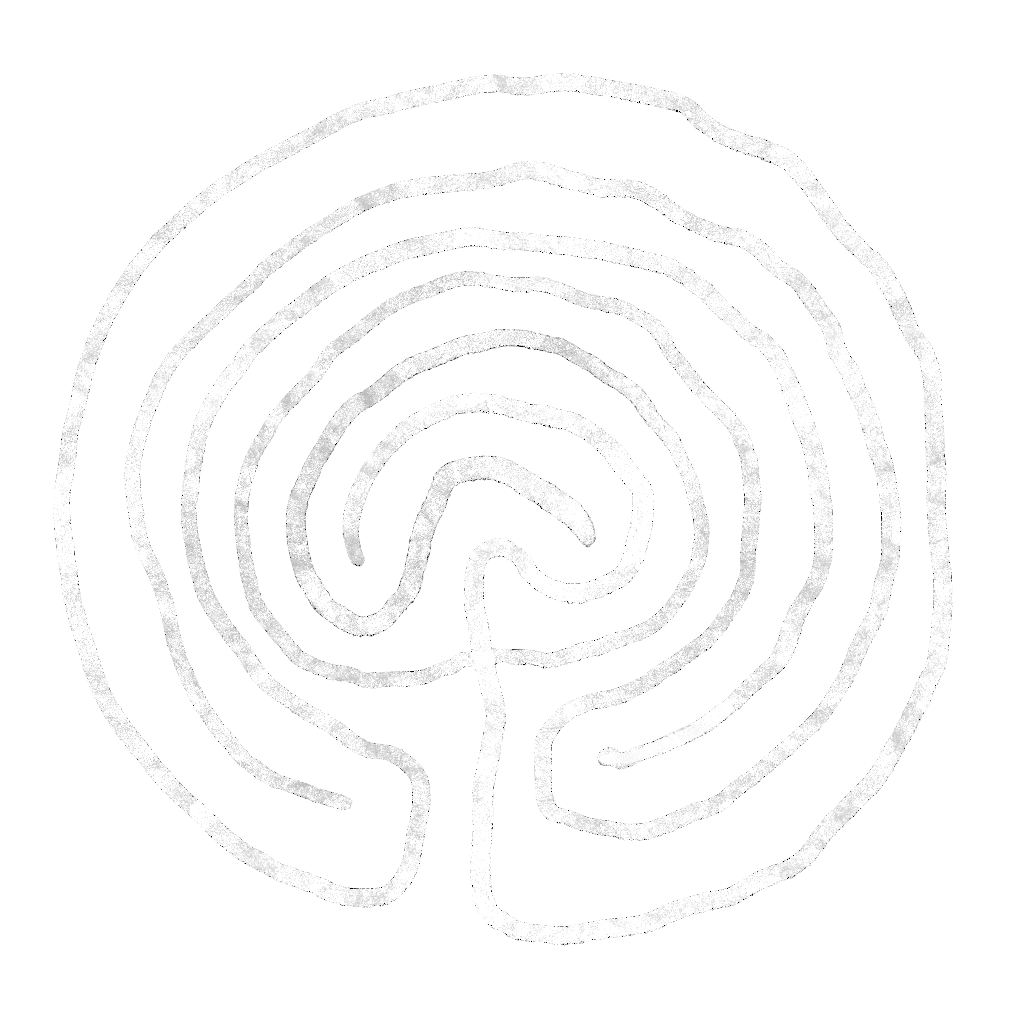
“Passing Through Five Portals”
New Risen Throne Album Review and Interview
Review: The Journey to Reach the Fathers
The album was released on December 19, 2025, and I’ve essentially been living with it ever since: listening while commuting, working, or studying, and several times just lying in bed, half-asleep. I’ve had a lot going on in my life recently, and this album – with the journey implied by its title – has consistently helped my troubled mind find relief.
The opening track (The Leaving) starts slowly, with subtle vocals that are felt more than heard. It places me in a state where I simply allow myself to be guided by the sounds – vast, cavernous drones and monotonous percussion construct the starting point of my voyage. Then, a slow melody emerges and carries me away, like a boat on a misty river.
The album continues with Blowing Funeral Chant, where the voices grow stronger. I arrive at a sacred place; a ritual begins, and the melodies become more intense – dramatic, even. At this point, the voyage reaches a threshold that feels like breaking through a barrier. With a heavy heart, I step through this gate.
God Never Spoke releases the tension of the previous track with a slow beginning that sounds like wind whipping around a forgotten mountain monastery. Distorted sounds and deep drones surround me as I walk through empty halls. I leave the structure behind and see the first gate in the distance.
Gate I leads me through sorrow and despair. Haunting voices envelop me, and a distant melody guides me toward the next transition.
Gate II is anxiety and fear. The voices become more disturbing, while repetitive sounds and noises attempt to seize me before I can reach the next stage of my spiritual journey. The style shifts, becoming more somber, at times even industrial. I escape this place to reach the third gate.
As I step through Gate III, the choir leads me into the deeper reaches of this mesmerizing world. Ancient pipes and percussion signal the start of another ritual, and I submerge into the dark river I had been walking beside until now. Pulsating drums urge me to shed everything I have carried so far – to reach the next gate, I must be cleansed.
I reach Gate IV, where a damaged bell tolls in the distance. A deep, chanting voice and drums join in, forming a ritual circle where my transformation begins. I leave the remains of my earthly spirit behind, preparing to cross the final gate.
Deep voices welcome me at Gate V as I reach the final leg of the voyage. The space becomes enormous, everything else fades away, and another, clearer bell sounds from somewhere. Does it lead me onward, or is it a farewell? A new, repeating melody and fresh voices emerge from the infinite space to embrace me. This is the final transformation: the death of everything I mistakenly thought I was. Drums pulsate through my ethereal body as I reach the end.
Where Fathers Dwell is the final destination. A drone and a flute-like sound calm me upon arrival. Everything is slow and peaceful now. Ethereal sounds fill the space around me, finally dying away and leaving me alone in this wonderful place…
Running over an hour and a half, this album is a deep and lasting experience. It can safely be called a masterpiece and one of the most important releases of the past year. If someone new to the genre asked me for a recommendation, this is the one I would give them. It perfectly summarizes what dark ambient is all about.
Gabriele released two videos on YouTube for the first two tracks, which are also highly recommended; I have linked them below.
Interview: Gabriele Panci (New Risen Throne)
I also asked Gabriele some questions. Here is the full interview.
Hypogeum: When you started out in the early 2000s, who or what were your main inspirations? What drew you toward dark ambient specifically?
Gabriele: I discovered dark ambient and related genres through black metal. It’s a genre I first encountered in the early 1990s (and one I still listen to extensively today), and by following a couple of musicians I gradually found my way into the more electronic side of music.
In particular, I was influenced by Gylve “Fenriz” Nagell of Darkthrone through his project Neptune Towers, and by Mortiis (formerly of Emperor) with his dungeon synth project. Through Mortiis – whom I also had the pleasure of collaborating with a few years ago – I discovered Cold Meat Industry and the entire world behind this remarkable label.
In 2009, Cold Meat Industry released my album Crossing the Withered Regions.
You released two videos for the new album that seem to be thematically connected. Do you have plans for more visuals or perhaps a larger project (similar to The Outside VR)? Why do you feel it is important to create visual media for your music?
For that album, I actually created four videos that I use during live performances. They are definitely connected to each other, both in terms of visual language and structure: all of them are shot in a single continuous take, to give the impression of one long journey, and they all share the presence of portals – the central element of the concept behind
After many years of work, I am now close to completing The Outside VR. Following several changes in style and in the type of experience, the project is finally approaching release – at least the first chapter, which focuses on the present state of The Outside. The second chapter, which explores how the Outside came into existence, is still in the concept phase.
I believe the visual aspect is important not only for my music, but for dark ambient in general, especially when it is presented in a live context. Although this genre strongly relies on the listener’s imagination, it can be valuable to guide the audience toward the emotional state, thoughts, and visions of the artist who created that piece or that album.
Could you share some details about your workflow? For example, what kind of sounds or environments inspire you? Do you use samples or field recordings? Do you have any favorite instruments – synths, guitar, or percussion? What do you think is unique about your approach to making music?
What I usually do – and what I enjoy most – is to accompany the music I compose with a visual approach that reflects the imagery of the album. This is how I have created all the videos for my music: they developed alongside the musical work, and in some way the music itself is also inspired by what I create visually.
Over these twenty years of activity, many different things have inspired me – books, films, even simple walks in the woods. There have been countless sources that have given me ideas for the concepts connected to my music.
In the very early years, I worked exclusively on a computer, using a large number of plugins. In recent years, I have also started using hardware synthesizers to create sounds, while maintaining my use of field recordings and my passion for heavy resampling, especially of vocal material.
How has the production of ambient music changed since you started, and how have you evolved as an artist in that time?
Well, having listened to this genre for many years, I can say that what has definitely evolved is the complexity and structure of the compositions. Even in my own work, you can notice an increasingly pronounced approach toward melody. I always begin a new piece with a drone-based foundation, but I often find myself gradually introducing something melodic – even if it is primitive and minimal. It has become an aspect that is more and more present in my music.
I know you rarely play live. Is that a conscious decision, or do you simply not seek out those opportunities? Do you have any plans for live performances in 2026? What would a “dream” live event look like for you?
I usually perform live once or twice a year – I can’t do more because of work commitments. Over the years, however, I’ve had the opportunity to take part in some excellent festivals, including some of the most historic ones for this genre, and in completely different contexts.
For example, I performed at Phobos Festival, a festival dedicated exclusively to dark ambient, held in a church in Wuppertal, with an almost sacred and contemplative atmosphere. But I’ve also played at Brutal Assault, one of the most important metal festivals in Europe, where there is an entire stage dedicated to electronic music – right in the middle of the kind of overwhelming chaos that only a festival like Brutal Assault can create.
I don’t think I have a specific “dream” event. I’ve felt completely at ease at every festival where I’ve performed.
What other art forms are important to you besides music? Could you share some of your favourites – books, movies, etc?
I definitely enjoy films and TV series. I don’t have a favorite genre – I like to watch many different kinds of content. When I’m working, if I’m not listening to music, I almost always have something playing in the background. I can easily finish entire seasons of a series in just a few days. I also really enjoy reading, especially during periods when I have the time to spend hours immersed in books. My favorite author has always been Philip K. Dick – a true visionary, perhaps one of the greatest we’ve had the chance to read.
Based on the track titles and your previous work, there seems to be a specific concept or story behind this release. Would you like to share anything about that, or do you prefer to leave it to the listeners to interpret for themselves?
As I mentioned earlier regarding the visual side, dark ambient leaves a lot of space for the listener – much more than many other musical genres – especially because of its sometimes “abstract” structure. This is certainly true for some of my earlier works, but for my more recent projects, there is a well-defined concept underlying all the pieces, and even the sequence of the tracks.
In my latest album in particular, I wanted to emphasize my disagreement with the christian view of life after death. When we die, we die. Although this axiom is always valid, when someone close to us passes away, we naturally imagine a new journey for them. I see it as a journey that frees us from all the superfluous things we accumulate during life. I envisioned it as passing through five portals, until we reach a place where we are reunited with those we have loved. But there is nothing divine, nothing supernatural.
This album is dedicated to my father, who passed away almost thirty years ago. I have always wanted to dedicate one of my works to him, but I never felt ready – and above all, I never felt “skilled” enough – to adequately translate my feelings and thoughts about his passing. With this album, I believe I finally have.
I imagine that having just finished an album, you might not have immediate plans. However, are there any other projects you’re currently working on? Is there anything you’d love to do if you had the time and energy?
Actually, I’m working on two new albums for 2026 and 2027, which will be released through two Italian labels, Eighth Tower Records and Glacial Movements. As I mentioned, I’m about to finalize the first part of The Outside VR, and I’ll soon be able to release it on stores. It has been a long project, one that I’ve only been able to dedicate time to sporadically and in a rather discontinuous way.
Thank you very much for taking the time to answer these questions. If there is any message you’d like to send to the readers of Hypogeum, please feel free to include it here.
Thank you for giving me the opportunity to appear in your interesting zine, and I hope we’ll be in touch again in the future. Dark ambient has always been a very niche genre, so I want to thank everyone who reads this conversation and shares it, helping to spread the word.